Seven layers sit between the moulded shell and the buyer, and each one carries a cost and a label rule. Here is how to build the stack from US$0.20 to US$2.50 per unit.
Packaging is where a hard case stops being a product and becomes a SKU. The same 5 mm EVA shell can ship in a 60 micron polybag with US$0.20 of packaging around it or in a rigid gift box with a printed sleeve at US$2.50, and that spread decides which shelf it lands on and what a marketplace does with the listing.
Below is the retail stack layer by layer, the label rules that carry legal weight, and the drop test a master carton has to pass before it leaves the factory.
The seven layers of the retail stack
A complete retail build for an EVA hard case has seven layers. Each is a purchase order line, and each can be removed to save money:
- Polybag — 60 micron LDPE with a suffocation warning in the market's language, US$0.03–0.06.
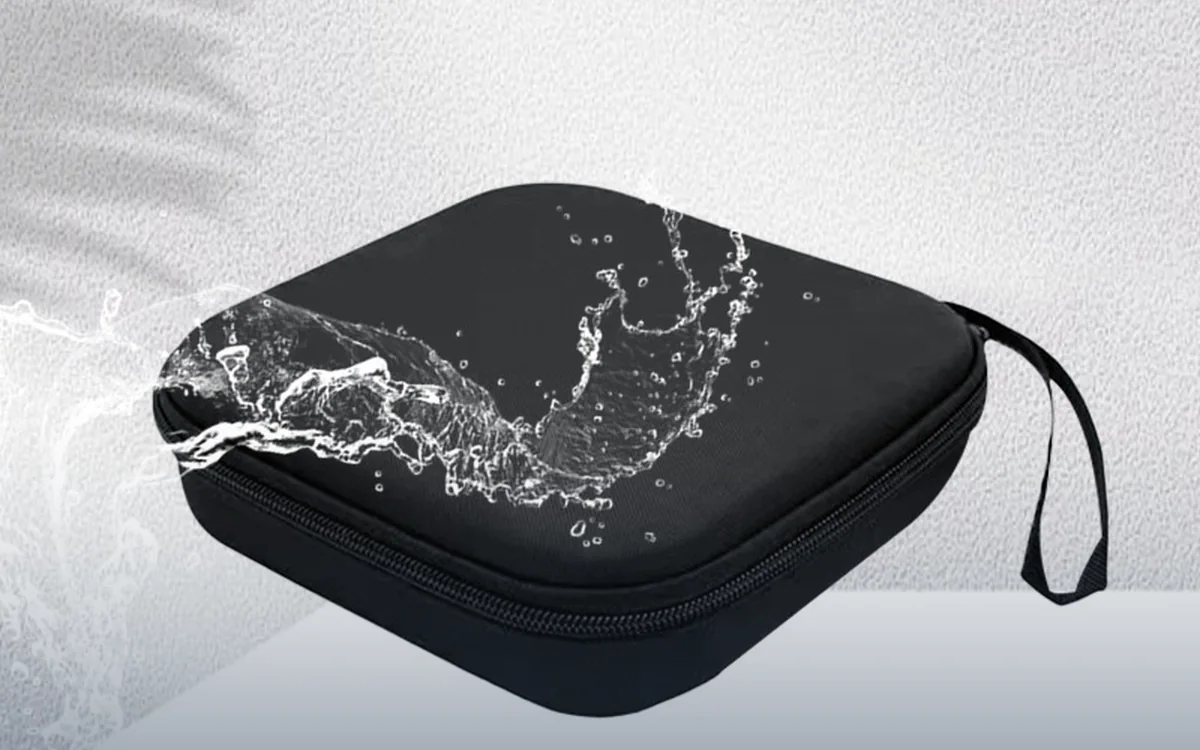
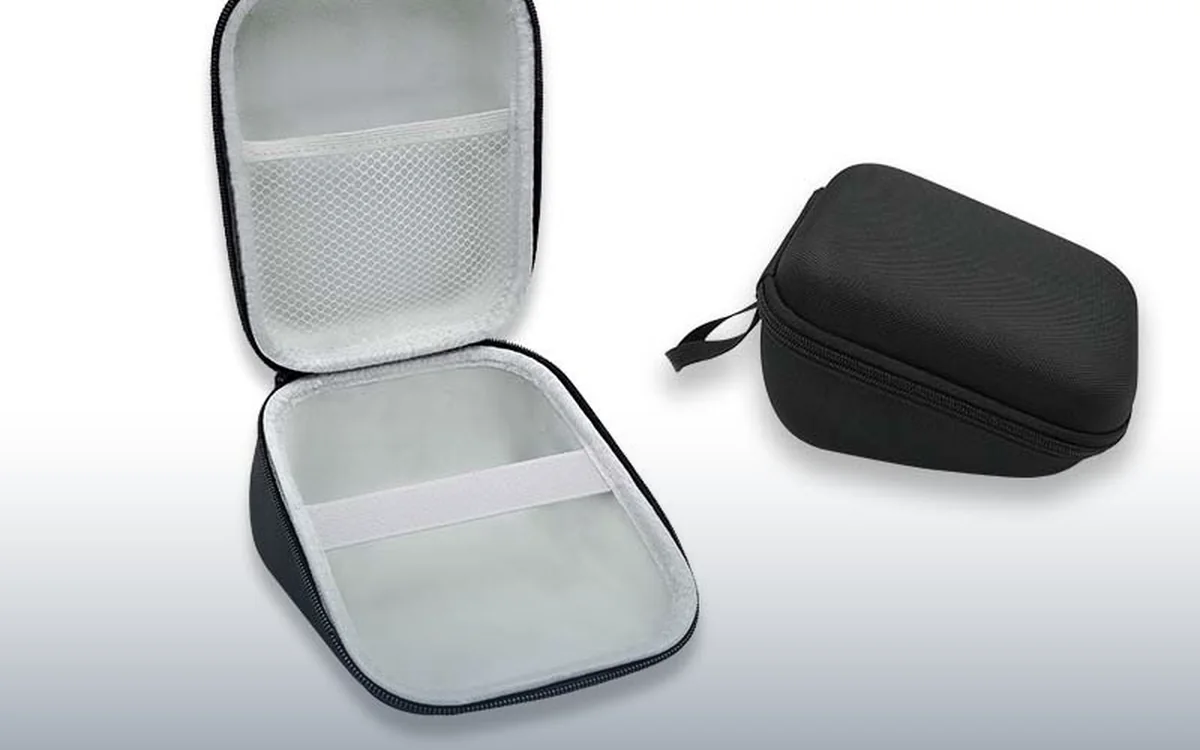
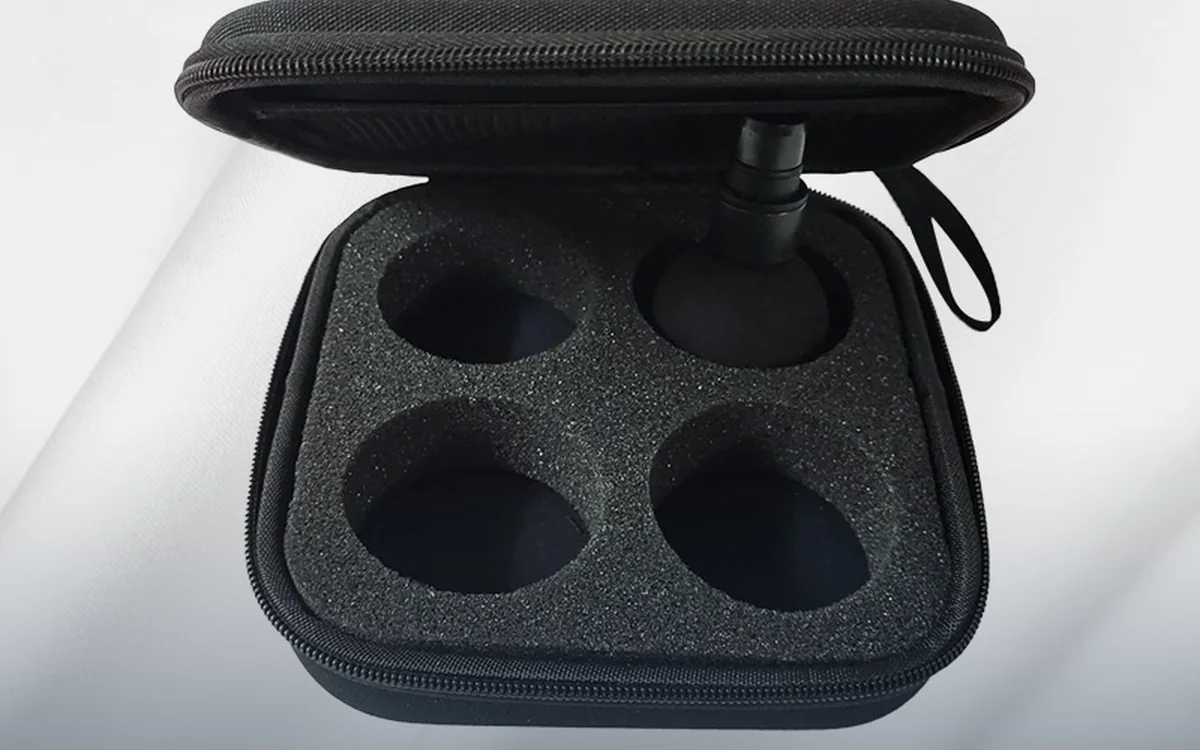
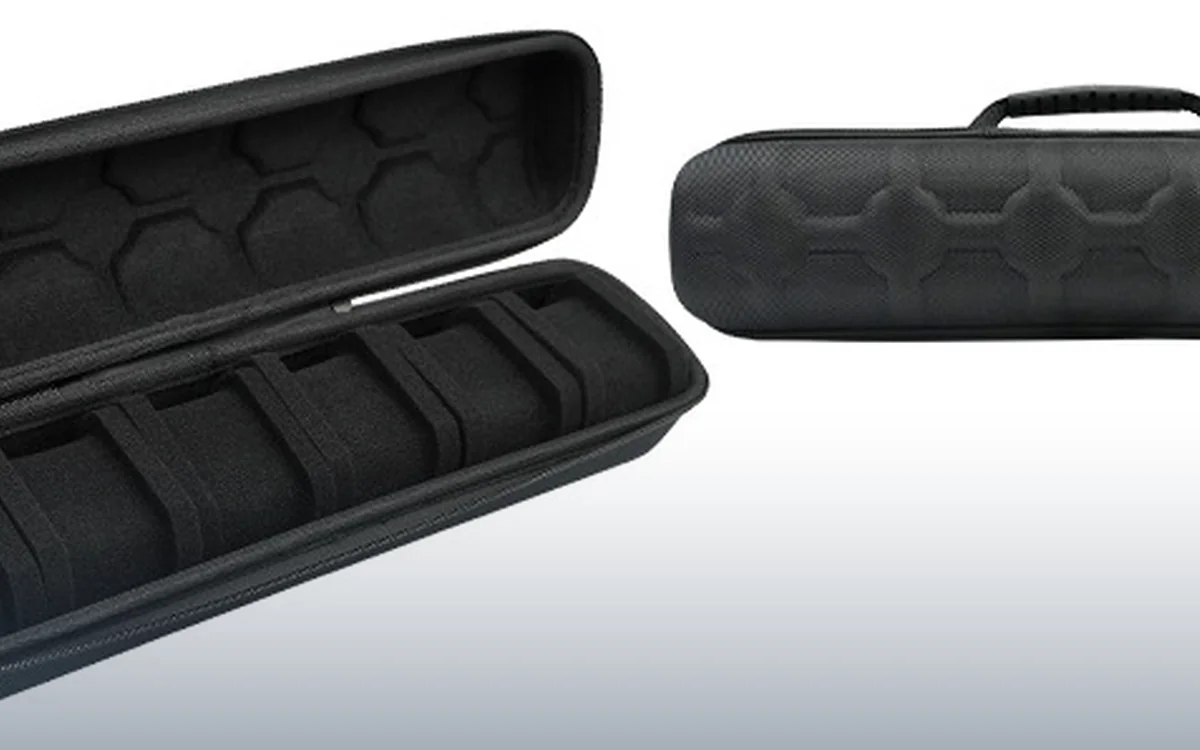
- EVA case — the product itself: moulded shell, 1680D nylon or PU face, velvet lining, zipper.
- Insert card — 300 gsm coated board printed both sides, listing what fits inside, US$0.04–0.08.
- Hangtag — 350 gsm board, 5 mm punched hole, cotton string, US$0.05–0.10.
- Sleeve — a printed wrap in 300–350 gsm board around the case, US$0.12–0.25.
- Gift box — 157 gsm art paper over greyboard, US$0.35 for a folding carton and US$1.60 for a rigid magnetic box.
- Master carton — 5-layer BC flute holding 10 units, US$0.60–1.20 per carton, or US$0.06–0.12 per unit.
The case appears in the stack because on a shelf it is packaging as much as product. The moulded shell and the lined cavity are what a buyer sees and touches before anything is opened, which is why a sleeve over a well-finished case photographs better than a gift box around a plain one.
The layers that protect
The polybag is the cheapest insurance in the box and the easiest to get wrong. 60 micron LDPE keeps dust and handling marks off a 1680D face, and it has to carry a suffocation warning at 2 mm minimum type height in every language of the market where the unit is sold. Dropping to 40 micron saves about US$0.01 and tears at the zipper pull on a 1.2 kg case.
The insert card does more work than most buyers expect. Page one shows the case open with the device installed; page two lists the fit — model numbers, maximum device dimensions in millimetres, and what the case does not protect against. A card that names 12 compatible models reduces returns more than a paragraph of website copy, because the customer reads it in the room where they are packing the bag.
Nothing else in the stack has to survive a drop. The case and the card handle that job, which is why a US$0.20 build is a legitimate choice rather than a corner cut.
The layers that sell
The hangtag is the retail signal. 350 gsm board with matte lamination on one side, a 5 mm hole and a cotton string costs US$0.05–0.10, and it is the difference between a case that reads as hardware and one that reads as an accessory. Print both sides: the back is where a QR code to a fitting guide belongs.
A sleeve wraps the case and protects the face from shelf handling. It is the layer that lets one shell serve two channels — the same case ships to a marketplace in a polybag and to a boutique in a sleeve. A 350 gsm sleeve costs US$0.12–0.25 and needs its own dieline, its own artwork approval and its own proof, so schedule it as a separate item.
The gift box is the most expensive layer and the hardest to schedule. It runs from US$0.35 for a printed folding carton to US$1.60 for a rigid magnetic box with a moulded EVA nest, needs a separate supplier, a 7–10 day proof cycle and a minimum of 500–1,000 pcs, and ships flat to the case factory for packing. It is worth the money above a US$40 retail price and it is wasted on a US$12 case sold through a marketplace.
Barcodes: GTIN on the retail unit, FNSKU on the Amazon unit
A retail barcode is a GTIN — 12 digits in the US and Canada, 13 in Europe — bought from GS1 and never resold from a third-party list. Print it as UPC-A at 100% magnification, 37.3 mm wide by 25.9 mm high, with a 3.2 mm quiet zone on each side, on the bottom panel of the gift box or sleeve. The scanner at the till points down; the front panel does not have to compete with it.
Amazon adds a second identifier. The FNSKU is a 2.54 × 5.08 cm label issued per SKU, and it has to cover the original barcode completely — a GTIN peeking out beside an FNSKU is a receiving error and a stranded inventory case. Apply it to a flat, non-curved panel: the base of a gift box, or the outside of the polybag on a moulded case. Do not stick it to the EVA shell, because labels on textured foam lift in a cold fulfilment centre within a month.
Carton labels are separate again. The FBA box label is 10 × 10 cm, one per carton, and the FNSKU belongs on the outside of the carton only when the case is sold as a multi-pack. Keep GTIN, FNSKU and box label on three different surfaces and receiving stops being a guessing game.
The master carton and the ISTA 3A drop test
A master carton for a hard case is usually 5-layer BC flute at 60 × 40 × 40 cm, holding 10 units at 12–15 kg gross. The test that matters is ISTA 3A, the parcel delivery simulation: 10 drops — one corner, three edges, six faces — from a height set by package weight. Under 4.5 kg the drop is 76 cm, at 4.5–9 kg it is 61 cm, at 9–18 kg it is 46 cm, and at 18–27 kg it is 38 cm. A loaded case carton sits in the 46 cm band.
Pass criteria belong in the test plan, not in an afterthought: no product damage, no more than 5% loss of carton compression strength, and the case must still close on its zipper. If you ship to FBA, add ISTA 6-Amazon.com over-box or SIOC, because Amazon's own sequence is harsher on carton edges than 3A.
Test a production carton, never a sample-room prototype. A hand-built carton with a double glued wall passes 3A; a production carton with 3 mm less board thickness does not.
Labels that carry legal weight
Country of origin is mandatory in both markets: "Made in China" on the retail unit for the US, and a non-preferential origin statement for the EU. Put it where a customer can find it after purchase — the base of the gift box or the back of the insert card — not only on the master carton, which is usually bailed and recycled before anyone reads it.
Material and recycling marks follow the packaging, not the brand. A polybag takes resin code 4 LDPE and, in France, the Triman logo. A paper sleeve takes 21 PAP and, if you claim it, an FSC mark with the licence number. EVA is resin code 7, other, and is not accepted in kerbside paper or plastic collections in most of Europe, so print "not recyclable in kerbside collection" rather than a chasing-arrows symbol that a municipal sorter will reject.
- Germany — register with LUCID under VerpackG before the first shipment; the registration number goes on the invoice, not the box.
- France — Triman plus the EPR sorting statement on every packaged unit.
- United States — no federal recycling mark requirement, but a California Proposition 65 warning applies if inks or EVA contain a listed substance.
None of this is print-shop work. Label copy is a compliance document, and it should be approved by the same person who signs off the test reports.
What packaging costs, US$0.20 to US$2.50
The low end is a polybag at US$0.06, an insert card at US$0.06 and US$0.08 of master carton: US$0.20 per unit at 1,000 pcs. That build protects the case in transit and tells the buyer nothing about the brand, which is the right choice for a marketplace-first launch where the listing does the selling.
The high end adds every layer and three costs that are not layers: polybag 0.06, insert card 0.08, hangtag 0.10, sleeve 0.25, rigid gift box 1.60, tissue paper and seal 0.06, carton share 0.15 and packing labour 0.20. That is US$2.50 per unit at 1,000 pcs. It survives a retail shelf, a photograph and a gift-giving moment, and it sits between a fifth and two-fifths of the landed value of a US$6–12 case.
Most programmes land between US$0.60 and US$1.20. The moves that pay back fastest are the insert card first (US$0.06, and it cuts returns), then the hangtag (US$0.08), then the sleeve (US$0.18). The gift box is the last layer to add and the first to cut when retail price is under US$25.
Artwork approval: a 14-day path
Artwork is where a packaging order loses a week, usually because the dieline arrived after the design was finished. This sequence holds the schedule:
- Day 0 — brief: case dimensions, retail price, channel, markets and language list.
- Day 2 — dielines from the printer for sleeve, insert card and gift box, PDF at 1:1 with 3 mm bleed.
- Day 4 — artwork v1 in CMYK at 300 dpi, fonts outlined, dieline on a separate layer, barcodes as vector.
- Day 6 — digital proof for copy, then a physical proof for colour.
- Day 8 — signed PDF plus a Pantone reference or a lab dip for the case fabric.
- Day 10 — plates and CTP; one revision is normal, two adds 3 days.
- Day 14 — print, laminate, die-cut and convert, then boxes ship flat to the case factory for packing.
Add 5 days if a Pantone has to match a moulded colour, and 3 days per additional language for multi-market labels. Approve the physical proof, not the screen: a 1680D nylon face and a 350 gsm sleeve never match on a monitor.
Send the retail price and the channel with the brief and the packaging recommendation comes back with a cost per unit attached, before any dieline is drawn.