Face fabric
1680D for abrasion, 600D for cost, PU for a clinical look. Colour matched to a Pantone on the actual face.
A 230 × 230 × 60 mm hard case with a 200 mm die-cut coil cavity, a wipe-clean lining and a flat bay for a spare diaphragm and eartips. Tooled from your instrument, 5 mm moulded EVA shell, MOQ 300 pcs.
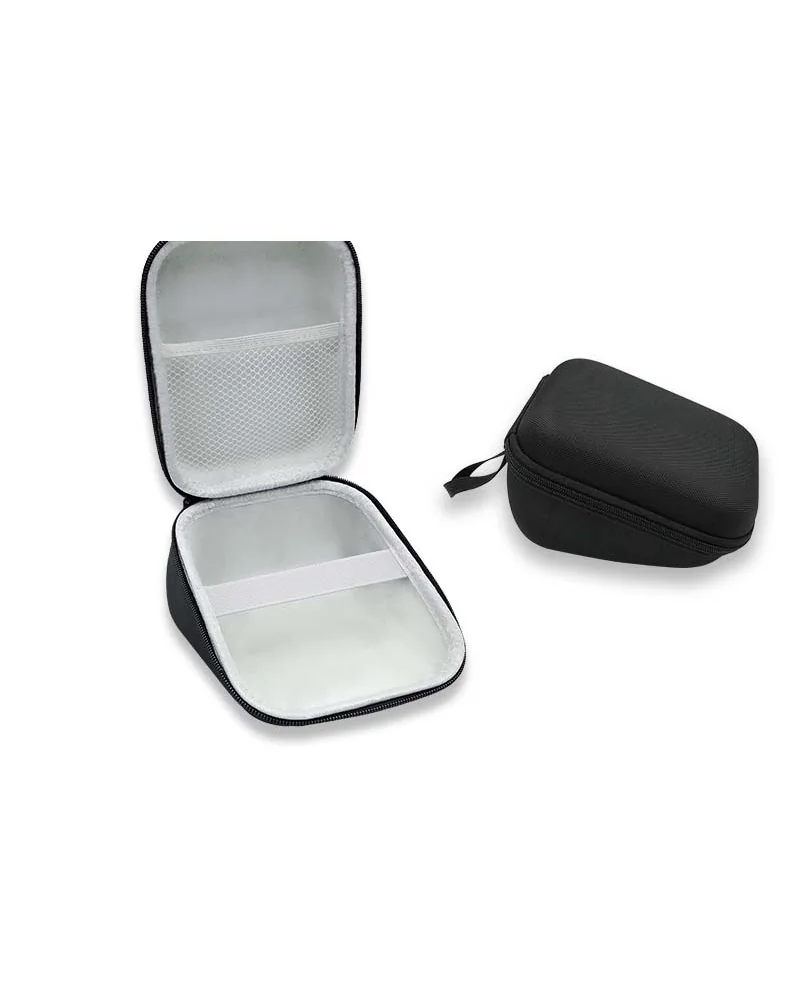
A stethoscope is one coil of 60 cm tubing, a 45 mm chest piece and a pair of ear tubes with soft tips. Coiled, it fills a circle of about 200 mm; left loose in a bag, the ear tubes kink at the Y-junction and the chest piece lands on whatever is under it. That kink is the failure a case has to prevent, not the scratches: a kinked tube changes the acoustic path and the user replaces the whole instrument.
The case we build for it is 230 × 230 × 60 mm: a 200 mm coil cavity cut at ±1.5 mm, a flat bay beside it for a spare diaphragm, eartips and a penlight, and a lid pocket for an ID card. The shell is 5 mm EVA compression-moulded over an aluminium tool, faced in 1680D nylon, lined in wipe-clean 210D polyester. Weight is 240–280 g empty. It is a transport and storage case, not a sterilisation container.
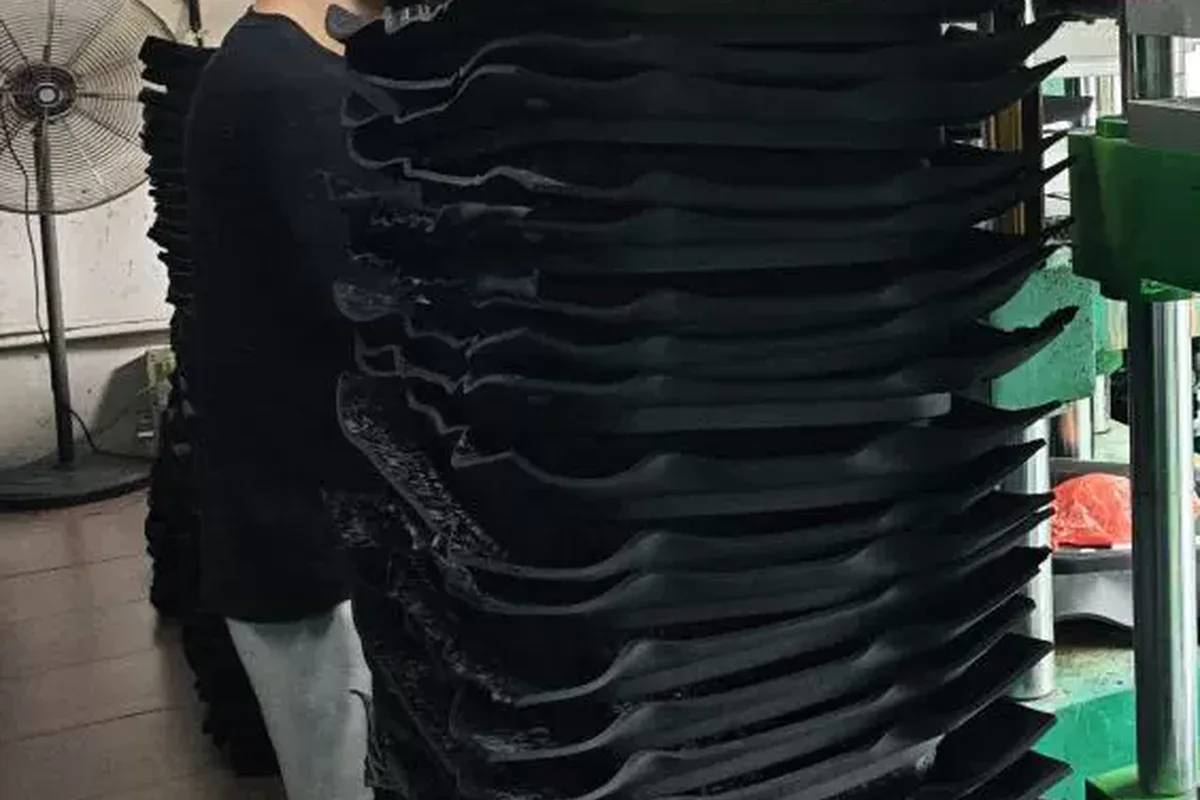
The cavity is drawn from a 3D file of your instrument or from a physical unit you send. A CNC router cuts an aluminium master at 15–20 days, and the first shells come off the press within three days of that. Wall thickness, corner radius and the insert outline are fixed before the tool is quoted, because changing any of them after pressing means re-cutting the tool.
Tooling runs US$600–1,400 for the compression mould and US$150–300 for the die-cut insert tool, depending on cavity count and size. Both are credited back against orders of 2,000 pcs. If your instrument fits one of the 300+ moulds already on file, the tooling line is zero and sampling drops to 7–10 days — that is the first thing we check when a drawing arrives.
Every new shell is dropped at 1.2 m onto concrete on all six faces with a 1.2 kg dummy load inside, which is roughly twice the weight of a stethoscope and its accessories. A shell passes when the cavity keeps its shape and the corner compression stays under 1 mm. The test repeats on the first carton of every reorder.
Zips are cycled 5,000 times open and closed on a jig, and the handle is pulled to 30 kg. Neither test is a certificate: they are the two things that fail first on a case that is used daily, so they run before the order ships rather than after. Cartons are drop tested to ISTA 3A.
Stethoscope cases travel between patients, so the lining is chosen for wiping rather than for looks. We use 210D polyester or a medical-grade jersey: both take 70% isopropyl alcohol and quaternary ammonium wipes without the colour lifting or the surface going tacky. Velvet is not offered on this case for that reason.
The shell must not be autoclaved or ethylene-oxide sterilised. EVA softens from about 70 °C, so a 121 °C cycle will deform the moulded wall and close the cavity; ETO leaves residue in the foam that a wipe cannot reach. If your protocol requires sterile presentation, build a sterile barrier pouch around the case instead of sterilising the case itself.
Practical cleaning: wipe the interior with 70% IPA, leave the lid open for ten minutes so the foam surface dries, and do not soak. A wet insert takes 24–36 hours to dry at room temperature and mould will start before that.
Anything outside this table is a tooling conversation, not a refusal.
1680D for abrasion, 600D for cost, PU for a clinical look. Colour matched to a Pantone on the actual face.
Coil cavity plus a flat bay for a spare diaphragm and eartips, or two coils for a teaching set.
YKK #5, a water-resistant zip, or a metal puller with your name. 5,000-cycle tested.
Emboss 0.4–0.8 mm deep, heat transfer, or a metal plate. Strike-off in 3–5 days.
EVA sheet is specified by density, and 25 kg/m³ and 38 kg/m³ behave differently in the same mould. At 25 kg/m³ the shell is light and absorbs a knock by flexing; at 38 kg/m³ it holds its shape under a stack of cartons but weighs about 15% more. Medical buyers usually take 30–38 kg/m³ because the case is stacked in a cupboard, while retail kits stay at 25 kg/m³ to keep the pack light.
Wall thickness does the rest: 5 mm is the standard, 8 mm doubles the crush resistance and adds roughly 60 g. A PE board can be laminated into the base for a rigid floor at +US$0.30 per case. Hardness is quoted in Shore C, and the sheet we press sits at 35–45 Shore C — firm enough to hold a moulded wall, soft enough that the insert still compresses around the coil.
A 300-piece first order is enough to test the case with your team. We answer with tooling, unit price and a sampling date within 12 hours.
The same mould room and press floor build these pages and products.
Wipe-clean cases for blood pressure monitors, thermometers and first aid kits.
Read moreHow a new shell goes from a 3D drawing to an aluminium tool and a first-off sample.
Read moreEVA density, 1680D versus 600D, lining options and zip grades compared.
Read moreSend the device you need to pack, the quantity and the artwork you already have. We reply with a cavity drawing, a unit price at 300 and 3,000 pcs, and a sampling date — within 12 working hours.